Choosing a coffee table finish starts with the look you want, but a photograph is only part of the decision. A colour name, a visible pattern and a material specification answer different questions. Before choosing a custom version, establish what each surface is made from, how it will look beside your other furniture and which details belong in the approved specification.
Separate the finish name from the material
Treat a finish name as a reference to discuss, rather than a complete description of the table. A stone-pattern appearance does not, on its own, confirm natural stone. Similarly, a description of a wood-veneer surface does not specify the material beneath it or the construction of every other part.
Ask for three details separately: the surface material, the underlying panel or support, and the finish applied to the visible face. If a particular material matters to your project, state that requirement directly. This keeps a visual preference from becoming an assumption in the quotation.
Wood veneer and lacquer: the ULT-008 example
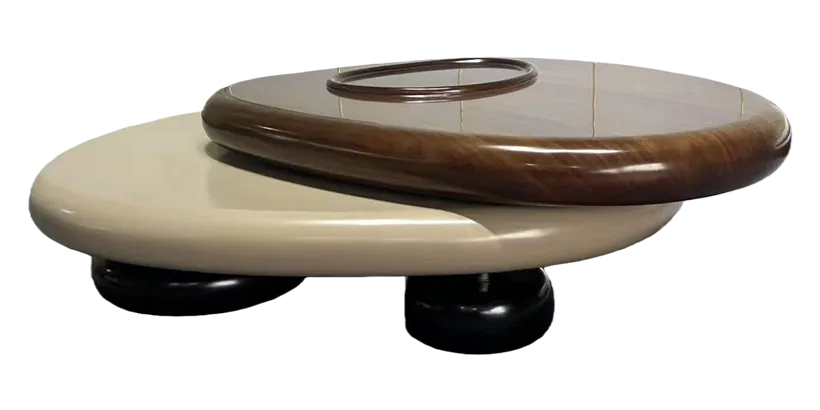
The ULT-008 Contemporary Luxury Sculptural Coffee Table combines an organic, layered outline with a high-gloss wood-veneer upper surface and a contrasting lacquered lower layer. Beige and Grey are its listed finish references. The grain and the two-layer composition are useful starting points when comparing it with the furniture already in a room.
For this design, review the upper and lower layers together. Ask which finish reference applies to each part, how the veneer grain will be arranged and how the exposed edges will be finished. Confirm the supporting panel and final finish specification rather than describing the entire table simply as wood.
Explore the ULT-008 layered coffee table
Patterned panels and a metallic detail: the ULT-009 example
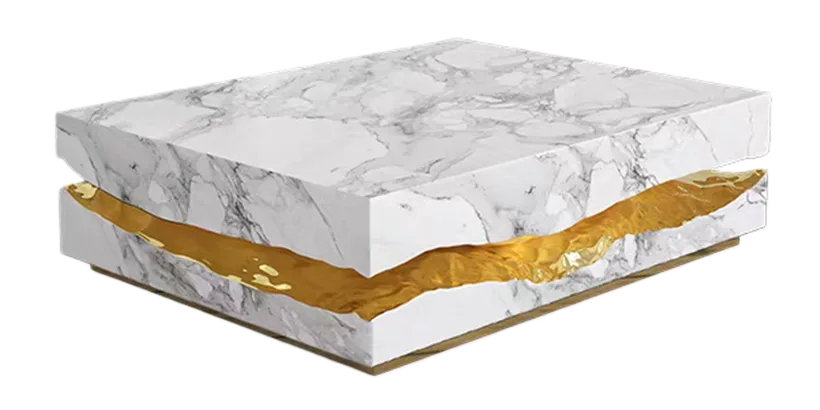
The ULT-009 Wave Coffee Table takes a different approach: a geometric volume with a sculpted metallic wave between its panels. Its listed finish references are Obsidian, Jadeite Rock Pattern, Yunlan Rock Pattern and Cloud Patterned Stone. These names identify the available visual references; they do not establish the composition of the panels.
Discuss the tabletop, side panels and metallic detail as separate parts. Ask for the selected panel material and surface treatment, then confirm the colour and finish of the wave detail. When a pattern is important to the design, request a reference showing its direction and how it meets the edges.
Explore the ULT-009 wave coffee table
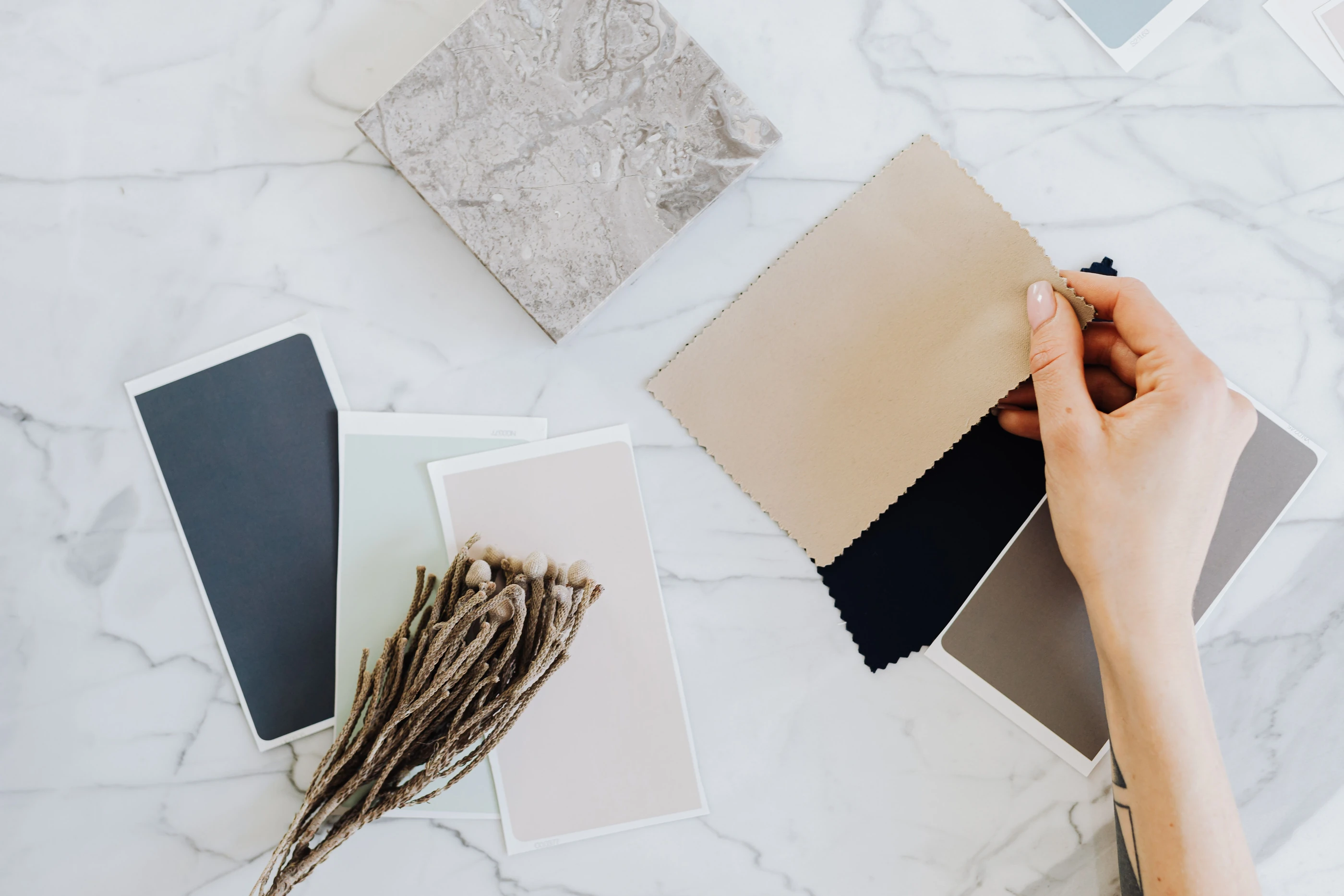
Review a sample in the context of the room
Bring the proposed finish together with your sofa fabric, flooring and any nearby wood or stone finishes. Compare them in the light of the intended room where possible. Look at the balance between colour, grain or pattern, and gloss; matching the colour name alone leaves those other choices unresolved.
Ask whether a physical sample is available, what part of the table it represents and how it will be identified in your order. If you are coordinating several pieces, label each sample with the model and intended surface. Keep the selected reference with your room plan so the same choice can be checked against the drawing and quotation.
Explore materials and finish references
Record the finish details before approving the order
Use a short finish schedule: model and quantity; upper-surface material and finish; lower layer or base finish; edge treatment; pattern or grain direction; and the approved sample reference. Add the agreed dimensions and drawing version so a size change does not leave the surface specification unclear.
For daily use, ask for care instructions for the actual selected finish, including cleaning and any precautions around heat or liquids. Do not infer scratch resistance, stain resistance or a particular durability rating from a photograph or a finish name. If performance documentation is required for your project, raise that requirement before approving the quotation.
To discuss a coffee table with ULEE, send the model, quantity, preferred finish reference and a plan or photograph of the seating area. Include the details you need confirmed. This gives the conversation a clear starting point while leaving the final material, sample and drawing to be agreed for your order.